
Your disciplined “chicken and rice” diet, designed for peak physical performance, is likely causing a state of microbial starvation that sabotages your mood, energy, and immune function.
- A monotonous diet drastically reduces gut microbiome diversity, which is directly linked to increased inflammation, anxiety, and stress via the gut-brain axis.
- True metabolic optimization comes from feeding your gut a wide array of plant-based foods, not just from consistent macronutrient tracking.
Recommendation: Shift your focus from simple macro-counting to a systematic diversification strategy, aiming for a minimum of 30 different plant-based foods each week to rebuild your gut ecosystem.
As a fitness enthusiast, you’ve mastered discipline. Your meal plan is a testament to precision: chicken, rice, broccoli, repeat. Every calorie is counted, every macro is tracked. This routine gives you a sense of control and predictability, cornerstones of any successful training regimen. You believe this optimized diet is the key to your performance. But as a gastroenterologist, I must tell you: this very discipline, this dietary monotony, is likely the biggest threat to your long-term health and athletic goals.
While you’ve been meticulously feeding your muscles, you’ve been systematically starving the trillions of microorganisms in your gut. This vast internal ecosystem, your microbiome, doesn’t thrive on consistency; it craves diversity. The conventional wisdom to “eat clean” often gets misinterpreted as “eat the same few ‘safe’ foods.” This leads to what I call microbial starvation, a condition where entire species of beneficial bacteria die off, unable to survive on the limited nutrients you provide.
But what if the true key to unlocking peak performance, stable energy, and mental resilience wasn’t found in the rigid consistency of your plate, but in its calculated variety? The problem isn’t your discipline; it’s the target of that discipline. This article will deconstruct the clinical reasons why your repetitive diet is a performance inhibitor. We will move beyond platitudes and provide a systematic framework to diversify your intake without sacrificing the structure you rely on, transforming your gut from a depleted landscape into a thriving ecosystem.
To navigate this complex but crucial topic, this guide breaks down the science and provides actionable strategies. We will explore the deep connection between your gut, your brain, and your stress levels, and offer a clear, step-by-step path to introduce dietary variety effectively and without discomfort.
Summary: Unlocking Gut Health by Breaking Dietary Monotony
- Why a Diverse Microbiome Is Key to Reducing Anxiety and Stress?
- How to Introduce New Ingredients Weekly Without Complicating Shopping?
- Supplements vs. Fermented Foods: Which Restores Gut Flora Faster?
- The Elimination Diet Mistake That Leads to Nutrient Deficiencies
- When to Introduce High-Fiber Foods to Avoid Bloating and Discomfort?
- Why Stimulating Your Vagus Nerve Is the Switch to Turn Off Stress?
- Why Your Body Reacts to Emails Like It Reacts to a Tiger Attack?
- A Balanced Diet for Executives: How to Avoid the Afternoon Energy Crash?
Why a Diverse Microbiome Is Key to Reducing Anxiety and Stress?
The link between your gut and your mood is not a wellness trend; it’s a profound biological reality known as the gut-brain axis. This bidirectional communication highway constantly sends signals between your gastrointestinal tract and your central nervous system. Your gut microbiome plays the role of a master regulator on this highway. A diverse community of bacteria breaks down dietary fibers into powerful compounds called Short-Chain Fatty Acids (SCFAs), such as butyrate. These molecules are not just gut-local; they travel through your bloodstream, cross the blood-brain barrier, and directly influence brain function.
Specifically, SCFAs help regulate the production of neurotransmitters like serotonin and dopamine, and they fortify the integrity of the blood-brain barrier, protecting your brain from inflammatory molecules. When your diet is monotonous, you starve the specific bacteria needed to produce these crucial SCFAs. The result is a drop in mood-stabilizing compounds and an increase in systemic inflammation, which your brain interprets as a stress signal. This creates a vicious cycle: a stressed brain sends signals that disrupt gut function, further damaging the microbiome and amplifying feelings of anxiety and stress.
Restoring diversity is the most effective way to break this cycle. Introducing a variety of foods, especially fermented ones, can have a rapid impact.
Case Study: The Stanford Fermented Foods Intervention
A landmark study from Stanford University provided clear evidence for this. Researchers found that a 10-week diet high in fermented foods led to a significant increase in microbiome diversity and a measurable decrease in 19 different inflammatory markers. A key finding was that eating foods such as yogurt, kefir, and kimchi led to an increase in overall microbial diversity, with stronger effects from larger servings. This demonstrates that targeted dietary changes can directly combat the inflammation that fuels the stress response.
Ultimately, a diverse gut is a resilient gut, better equipped to produce the molecules that keep your mind calm and focused, even under pressure.
How to Introduce New Ingredients Weekly Without Complicating Shopping?
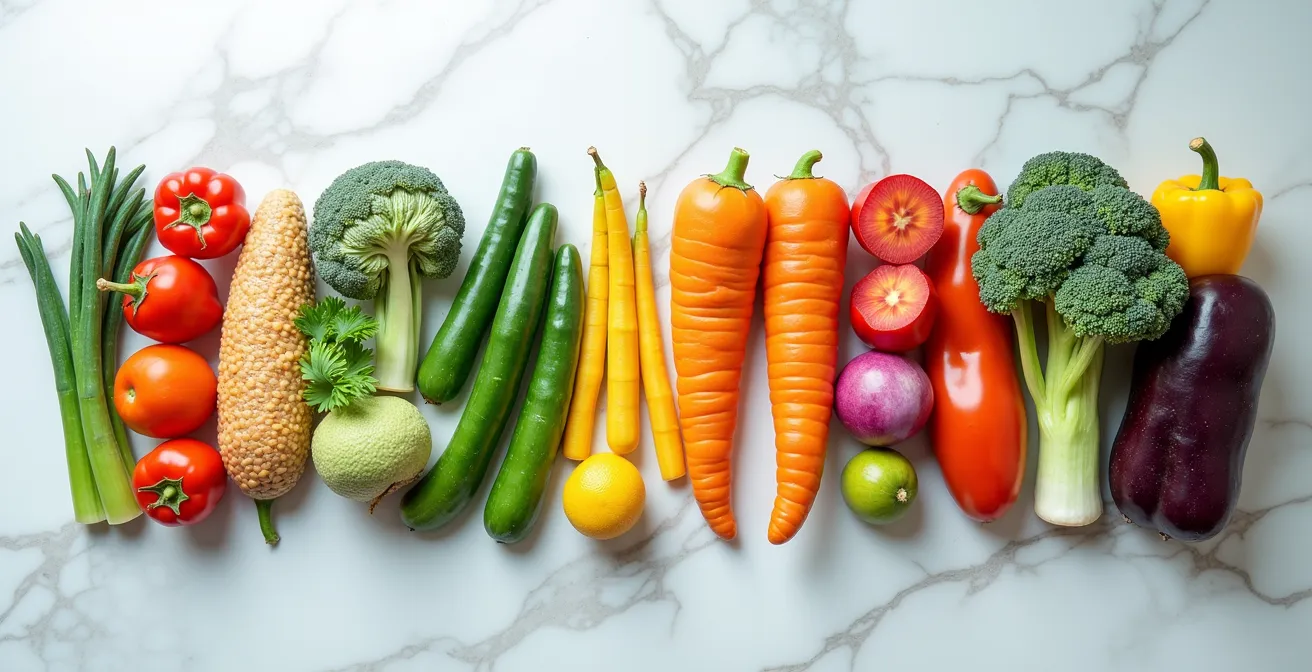
For someone accustomed to a streamlined shopping list, the idea of adding dozens of new items can feel overwhelming. The goal isn’t chaos; it’s systematic diversification. The most impactful, evidence-based target comes from the American Gut Project, which found that people who ate more than 30 different plant types per week had far more diverse and robust microbiomes than those who ate 10 or fewer. The key is to approach this “30-plant challenge” incrementally.
Instead of overhauling your entire grocery cart overnight, adopt a structured, gradual strategy. This makes the process manageable and sustainable, aligning with the disciplined mindset you already possess. The visual below conceptualizes how small, weekly additions compound over time to create significant dietary diversity.
To put this into practice, you don’t need a complete pantry makeover. Focus on small, consistent additions. Here are a few practical strategies to integrate new plant-based ingredients without adding complexity to your life:
- The “Plus-One” Approach: Each week, add just one new plant-based item to your standard shopping list. It could be a different type of berry for your oatmeal, a new herb for your chicken, or a handful of arugula in your salad. It’s a small change with a compounding microbial benefit.
- Use Weekly Culinary Themes: Structure your variety. Dedicate a week to a specific cuisine, like “Mediterranean Week.” This naturally introduces a cluster of new ingredients like olives, artichokes, parsley, and chickpeas in a cohesive way.
- Shop the Frozen Aisle: Don’t neglect frozen fruits and vegetables. They offer out-of-season variety, are just as nutritious as fresh, and eliminate the pressure of food waste if your schedule changes.
- Leverage Bulk Bins: For experimenting with new grains, nuts, seeds, or legumes, bulk bins are your best friend. You can buy small, inexpensive amounts to test a new ingredient without committing to a large package.
This method transforms diversification from a chore into a simple, weekly habit, ensuring your gut ecosystem receives the broad spectrum of nutrients it needs to thrive.
Supplements vs. Fermented Foods: Which Restores Gut Flora Faster?
In the quest for a healthier gut, many people turn to probiotic supplements, hoping for a quick fix. While high-quality probiotics have their place, particularly after a course of antibiotics, they are often misunderstood. A typical probiotic pill contains a few billion CFUs (Colony Forming Units) of a handful of bacterial strains. In contrast, your gut contains trillions of organisms from thousands of different species. Taking a probiotic is like dropping a few new tree species into a vast, ancient rainforest; it’s a small intervention, not a complete ecosystem restoration.
Fermented foods, on the other hand, offer a more holistic approach. They provide not just live bacteria, but also a rich matrix of beneficial byproducts created during the fermentation process. These compounds, often called postbiotics, include vitamins, enzymes, and organic acids that directly nourish your gut lining and existing microbial community. This is a crucial distinction that many people miss.
As Dr. Suzanne Devkota, a leading microbiome researcher, explains, the immediate benefit of fermented foods may not even be the live cultures themselves. It’s the rich chemical environment they introduce to your gut.
Many of the bacteria in fermented foods won’t survive nor colonize the gut, but the thousands of chemical products of fermentation that are in the food are the most beneficial part.
– Dr. Suzanne Devkota, Director of Human Microbiome Research Institute, Cedars-Sinai
So, which is faster? It’s not about a race. Restoring gut flora is a long-term process, not a 30-day challenge. Fermented foods offer a more sustainable and comprehensive strategy for day-to-day gut maintenance because they feed your existing ecosystem and introduce beneficial compounds simultaneously. Supplements are better viewed as a targeted, short-term tool for specific situations. For foundational, lasting change, whole, fermented foods are clinically superior.
Prioritizing foods like kefir, kimchi, sauerkraut, and unpasteurized yogurt provides a broader spectrum of benefits that a pill alone cannot replicate.
The Elimination Diet Mistake That Leads to Nutrient Deficiencies
Elimination diets are a powerful diagnostic tool in clinical settings, designed to identify specific food triggers for conditions like IBS, allergies, or autoimmune disorders. The protocol is strict but temporary: remove suspected food groups for a short period (typically 2-4 weeks) and then systematically reintroduce them to pinpoint the culprit. However, in the fitness and wellness world, this tool is often misused. People self-prescribe highly restrictive diets, cutting out entire food groups like gluten, dairy, or legumes indefinitely, believing it’s a “cleaner” or healthier way to eat.
This is a critical mistake. When you unnecessarily eliminate whole categories of food, you’re not just avoiding a potential irritant; you’re also creating a massive nutritional void. You are depriving your microbiome of entire classes of fibers and phytonutrients that are essential for its survival. This can lead to the extinction of beneficial bacterial species, reducing your gut’s resilience and capacity to produce anti-inflammatory compounds. Over time, this self-imposed restriction can ironically *increase* food sensitivities and lead to a less functional gut.
The complexity of fiber illustrates this danger perfectly. Not all fibers are the same, and their effects can be highly individual. For example, research shows that certain fibers can be beneficial for some individuals with inflammatory bowel disease but detrimental for others.
As one analysis highlights, the effects of fibers like β-fructans in people with IBD are complex: they can promote healing by boosting SCFA production, but this depends heavily on the individual’s specific microbiota and disease state. For some, certain fibers might worsen symptoms instead of relieving them. This underscores the risk of making broad dietary eliminations without clinical guidance.
Unless you are working with a clinician to diagnose a specific medical condition, the goal should always be maximum dietary inclusion, not exclusion. Your gut thrives on variety, and cutting out entire food groups without a clear medical reason is a direct path to an impoverished microbiome.
When to Introduce High-Fiber Foods to Avoid Bloating and Discomfort?
For someone transitioning from a low-fiber, monotonous diet (like chicken and rice), a sudden, massive increase in fiber is a recipe for disaster. The bloating, gas, and discomfort that often follow are not a sign that fiber is “bad” for you; it’s a signal that your gut microbiome is ill-equipped to handle the new workload. Your gut lacks sufficient populations of the specific bacteria needed to break down these complex carbohydrates. The solution is not to avoid fiber, but to introduce it gradually, like a progressive overload training program for your gut.
Start with soluble fibers, which are gentler on the digestive system. These fibers, found in foods like oats, carrots, apples, and psyllium husk, form a gel-like substance in the gut. Then, slowly introduce insoluble fibers, found in things like raw leafy greens, nuts, and whole grains, which add bulk to stool. Cooking methods can also help. Slow-cooking, stewing, or pressure-cooking high-fiber foods can “pre-digest” some of the complex starches, making them easier for your adapting microbiome to process.
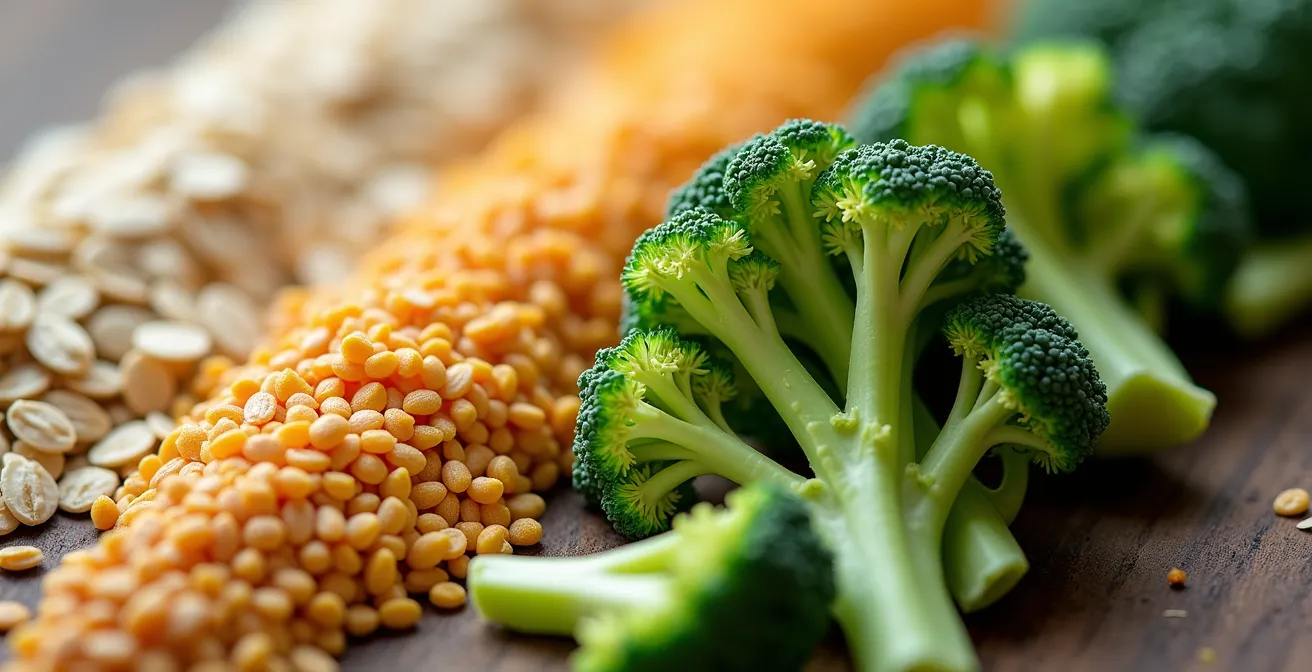
A structured approach is essential. A sound protocol involves starting small and allowing your gut ecosystem time to adapt and grow the necessary bacterial colonies before increasing the load. This methodical increase prevents the overwhelm that leads to discomfort.
Action Plan: Auditing Your Fiber Introduction
- Points of Contact: List all your current meals and snacks. Identify where you can start adding a small amount of new fiber (e.g., a tablespoon of chia seeds in a shake, a few slices of avocado with eggs).
- Collecte: Inventory your current “safe” foods. Choose one new, easy-to-digest soluble fiber source (e.g., steamed carrots, a small portion of oatmeal) to be your first addition.
- Consistency: Introduce this single new fiber source for one week without adding anything else. Monitor your body’s response. Your goal is consistency, not speed.
- Mémorabilité/Emotion: After a week, assess your tolerance. If there’s no significant discomfort, you’re ready for the next small step. This builds confidence and reduces the fear of bloating.
- Plan d’Integration: In week two, either slightly increase the portion of your first fiber source or add a second, different soluble fiber. Only after several weeks of tolerating soluble fibers should you begin to introduce small amounts of insoluble fiber.
Remember to increase your water intake proportionally with your fiber intake. This patient, strategic approach allows your microbiome to adapt, preventing discomfort and setting you up for long-term success.
Why Stimulating Your Vagus Nerve Is the Switch to Turn Off Stress?
The vagus nerve is the longest cranial nerve in your body, acting as the primary channel of the parasympathetic nervous system—your body’s “rest and digest” system. When this nerve is stimulated, it sends a signal to your brain to calm down, lowering your heart rate, blood pressure, and stress hormone levels like cortisol. Think of it as the biological off-switch for your body’s “fight or flight” response. A healthy, diverse microbiome plays a direct and active role in stimulating this crucial nerve.
Your gut bacteria communicate with the vagus nerve in several ways. They produce neurotransmitters like GABA, which has calming effects, right at the source in your gut. These signals are then transmitted directly to the brain via the vagus nerve. Furthermore, the SCFAs produced by a diverse microbiome have anti-inflammatory effects that extend to the nervous system, helping to maintain a healthy “vagal tone.” A high vagal tone means your body can switch from a stressed state to a relaxed state more quickly and efficiently.
When your gut microbiome lacks diversity, this communication breaks down. The lack of beneficial SCFAs and neurotransmitters, combined with increased inflammation, leads to a low vagal tone. Your body gets “stuck” in a stressed state. A healthy gut, populated by a wide range of bacteria, creates a more resilient internal environment. These robust microbial communities are better at nutrient consumption, which helps prevent pathogens from taking hold. The evidence suggests that resistant communities collectively consume nutrients that overlap with those used by pathogens, effectively outcompeting them and reducing the inflammatory burden on the body.
By diversifying your diet to feed these beneficial bacteria, you are not just improving digestion; you are actively tuning your nervous system to be more resilient to stress, giving you a powerful tool for mental and physical recovery.
Why Your Body Reacts to Emails Like It Reacts to a Tiger Attack?
Your body’s stress response system is ancient. It evolved to handle acute, life-threatening dangers, like being chased by a tiger. When faced with such a threat, your adrenal glands flood your system with cortisol and adrenaline. This “fight or flight” response sharpens your focus, mobilizes energy to your muscles, and temporarily shuts down non-essential functions like digestion. This is a brilliant survival mechanism. The problem is, your nervous system can’t always distinguish between a tiger and a stressful work email.
In modern life, the “tigers” are chronic: work deadlines, financial worries, and a constant barrage of notifications. Each one triggers a small release of stress hormones. If your body’s internal environment is already compromised, this response is amplified. A key factor in this amplification is chronic low-grade inflammation, and a primary driver of this inflammation is a low-diversity gut microbiome. When your gut ecosystem is impoverished from a monotonous diet, the integrity of your gut lining weakens, allowing inflammatory molecules to “leak” into your bloodstream.
This constant state of inflammation puts your immune and nervous systems on high alert. Your body is already smoldering with a low-level fire. So, when a new stressor arrives—even a minor one—it’s like pouring gasoline on the embers. Your body overreacts, producing an exaggerated cortisol response. This is why you feel disproportionately exhausted, anxious, or irritable after a day of managing your inbox. Your physiological reaction is that of someone who has been running from predators all day. Indeed, extensive research has established that low diversity in the gut linked to obesity and inflammatory bowel disease, both conditions rooted in chronic inflammation.
By diversifying your diet, you reduce the underlying inflammation, effectively calming the “fire.” This allows your body to respond to daily stressors more appropriately, conserving your energy and preserving your mental well-being.
Key Takeaways
- Dietary diversity is non-negotiable: A monotonous diet starves your microbiome, leading to inflammation that directly impacts mood and stress through the gut-brain axis.
- Aim for 30+ plants per week: This is a concrete, evidence-based target for building a resilient gut ecosystem. Use systematic strategies like the “plus-one” approach to make it manageable.
- Introduce fiber gradually: To avoid bloating and discomfort, start with soluble fibers and increase your intake slowly, allowing your microbiome 2-3 weeks to adapt between increases.
A Balanced Diet for Executives: How to Avoid the Afternoon Energy Crash?
For the high-performing athlete who is also a professional, the 3 PM energy crash can be devastating. This sudden drop in energy and focus is often blamed on a big lunch or lack of sleep, but its roots frequently lie in blood sugar instability, which is heavily influenced by your gut microbiome. A diet low in diversity and fiber, especially one reliant on simple carbohydrates, can lead to sharp spikes and subsequent crashes in blood glucose. This is what some researchers call a “sugar dip.”
An interesting study on this phenomenon found that about one in four men experience these “sugar dips” approximately three hours after eating, leading to sudden hunger and a sharp decline in energy. The research suggests that the best solution is highly individual and requires experimentation. For consistent “dippers,” the advice is often to switch to a low-carbohydrate, high-fat, high-protein breakfast, or even to skip breakfast entirely, depending on what works best for their unique metabolism. This is about personalizing your diet based on your body’s feedback.
To achieve stable, all-day energy, you must manage your blood sugar, and a key strategy for this is to leverage your diet to support your gut. This involves not only what you eat, but when you eat. Implementing a period of overnight fasting, or time-restricted eating, can give your gut a chance to repair and reset. A 12-14 hour overnight fast is a powerful tool for reducing inflammation and improving insulin sensitivity. When you do eat, prioritizing fiber-rich foods at breakfast helps to slow the absorption of sugar and provide a steady release of energy. Including fermented foods with your lunch can further stabilize your gut and, by extension, your energy levels through the afternoon.
By combining a diverse, fiber-rich diet with smart timing strategies like overnight fasting, you can move away from the rollercoaster of energy spikes and crashes and achieve the sustained performance your demanding lifestyle requires. The next logical step is to begin systematically auditing and diversifying your plate to build this resilient foundation.